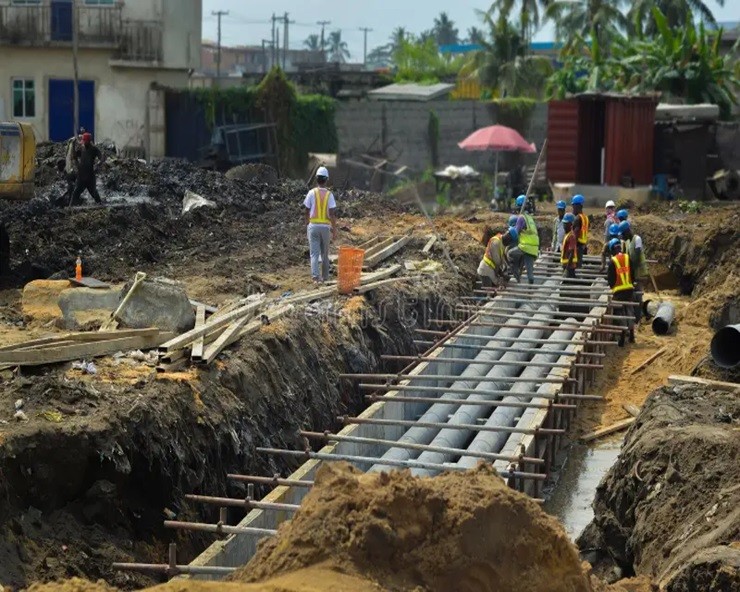
Construction of Rigid Pavement Service Works
The construction of rigid pavements, commonly referred to as concrete pavements, involves a multi-layered system designed to distribute vehicle loads via the flexural strength (or slab action) of a durable concrete slab to the layers beneath. This process demands meticulous site preparation, careful material selection, and adherence to specific construction procedures to achieve a lifespan of up to 40 years.
Key Components of a Rigid Pavement
A standard rigid pavement structure is composed of several essential layers:
Subgrade: The foundational layer of natural or prepared soil, compacted to provide a stable and uniform base for the entire pavement structure.
Subbase Course (Optional): Comprising granular materials like crushed stone aggregates, gravel, or lean concrete, this optional layer lies above the subgrade. It serves purposes such as drainage, protection from frost action, and providing more uniform support. However, it may be omitted if the subgrade itself offers sufficient strength.
Base Course: Located immediately beneath the concrete slab, this layer typically consists of high-quality materials such as dry lean concrete (DLC), particularly for roads subjected to heavy traffic. It ensures consistent support and serves as a stable platform for constructing the main slab.
Surface Course (Concrete Slab): The uppermost layer, made of Portland cement concrete (PCC) or reinforced concrete (RCC), forms the primary structural component that bears traffic loads and withstands environmental impacts. It often includes joints and may incorporate reinforcement elements like dowel bars and tie bars to control cracking and facilitate efficient load transf
Project Details
- Start Date:2024-10-02
- End Date: 2025-12-01
- Location: Street Chunky, MS 39323
- Clients: MCC LTD
- Category: Construction