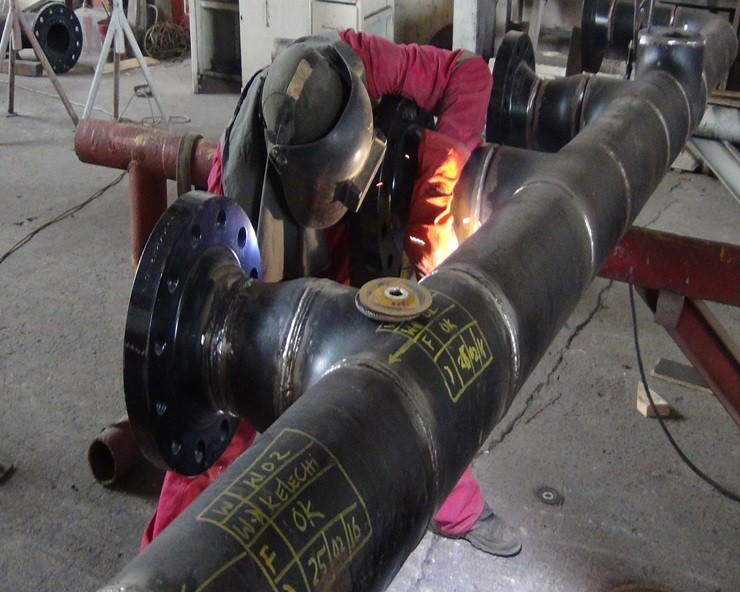
Fabrication
Fabrication services involve the construction of products or structures from various raw or semi-finished materials, often using processes like cutting, bending, and assembly.
This contrasts with manufacturing, which typically processes raw materials into a finished product on a large scale.
How Fabrication Services Work
The fabrication process typically involves several stages:
Design: The process begins with engineering drawings and specifications, often created using Computer-Aided Design (CAD) technology. Prototyping may also be used for testing and visualization.
Material Preparation: Raw materials, most commonly metals like steel and aluminum, are sourced and prepared for the specific project.
Processing: Various techniques are employed to shape the material. Common processes include:
Cutting: Methods include shearing, sawing, torching, or advanced techniques like laser or water jet cutting.
Forming/Bending: Using force to change the shape of flat material, such as with press brakes or hydroforming, without adding or removing material.
Machining: The removal of material from a solid block to create a desired shape, using lathes, mills, or drills.
Punching & Stamping: Using a press to create holes or indentations in the material.
Assembly: The processed parts are then assembled, frequently using welding, adhesives, or fasteners to join them into a complete structure or product.
Finishing: The final product often undergoes finishing processes, such as heat treatment, polishing, or painting, to improve appearance and durability.
Installation and Maintenance: For larger projects, the fabricated items may require professional installation and ongoing maintenance services.
Common Types of Fabrication Services
Fabrication shops provide custom solutions for a wide array of industries, including construction, automotive, aerospace, and medical. Specific services often include:
Steel Fabrication: A core service, producing everything from large warehouses and bridges to smaller components like beams, columns, and trusses.
Custom Metalwork: Creating bespoke items such as handrails, gates, staircases, tanks, and scaffolding.
Pipe Spooling and Construction: Specialized services for pipeline systems, including repairs and installation for both land and subsea projects.
Precision Engineering: Services that use sophisticated machinery and techniques (like CNC technologies) to produce parts with minimal errors and high accuracy.
Project Details
- Start Date:2021-02-03
- End Date: 2021-10-08
- Location: Drive Winter Haven, FL 33830
- Clients: MCC LTD/RSG
- Category: Mechanical